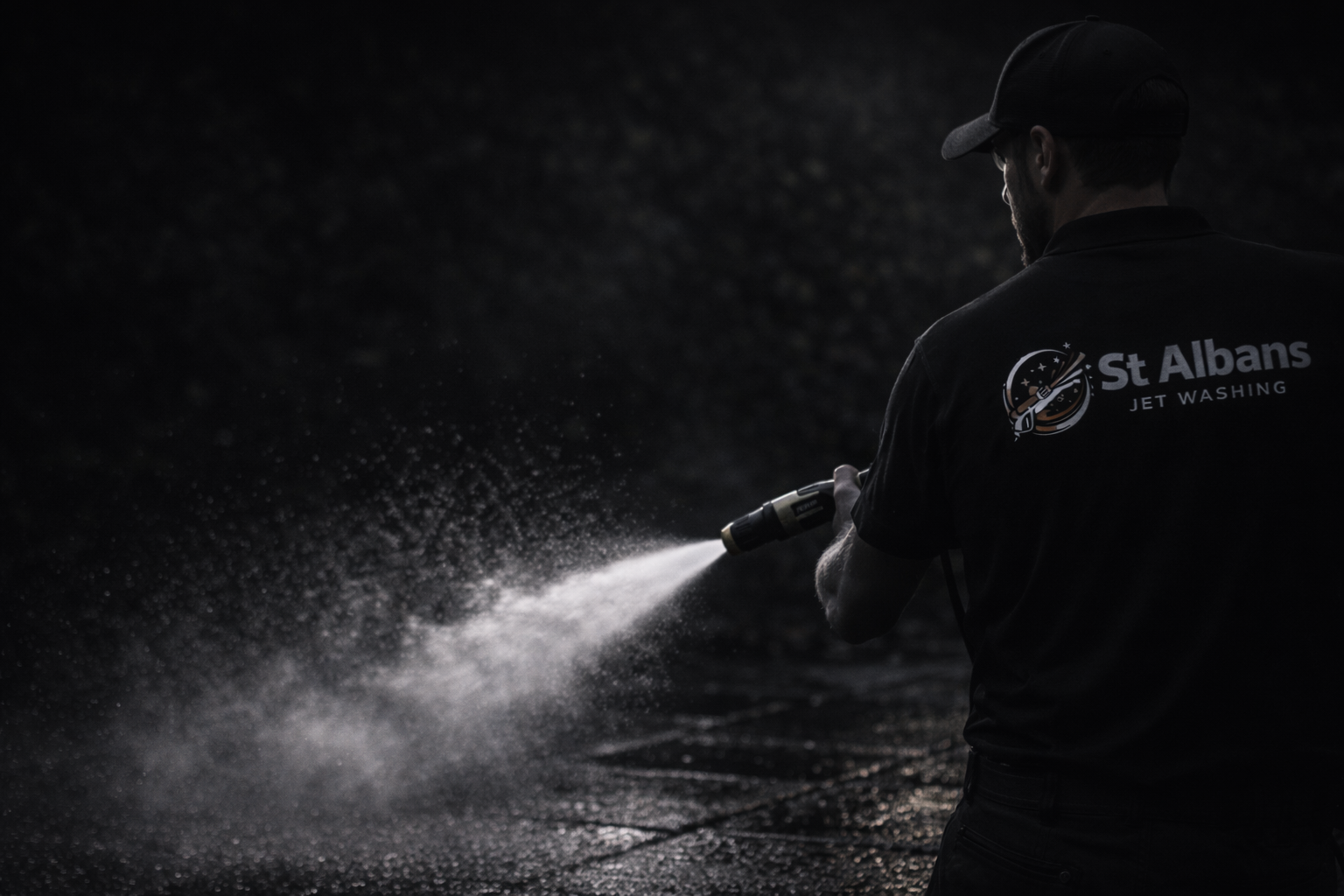





A clean driveway lifts the whole look of your home — but how often does it really need doing, what should it cost, and is it a job worth tackling yourself? Here is everything we tell our St Albans customers before they book.
How often should you clean your driveway?
For most homes in Hertfordshire, a thorough driveway clean once a year keeps things looking sharp. But the right frequency depends on your surroundings. Driveways that sit in shade, face north, or sit under trees collect algae and moss far faster than an open, sunny frontage.
The surface matters too. Block paving traps dirt in its joints and tends to show green growth first. Concrete and tarmac are more forgiving but still dull over time as grime builds into the surface. If you can see a clear difference between a covered and an exposed section of your drive, it is time for a clean.
Pressure washing vs softer methods
- Block paving — cleaned at a controlled pressure, then re-sanded so the joints stay locked and weed-resistant.
- Concrete & imprinted concrete — handles higher pressure well, though sealed surfaces need a gentler touch.
- Natural stone & older slabs — often better suited to a softer wash that lifts growth without pitting the surface.
Pro tip
Never let anyone use a turbo nozzle on block paving. It strips the surface, blasts out the jointing sand, and leaves swirl marks that are almost impossible to undo.
What affects the cost?
- Size and area — the square metreage is the obvious starting point.
- Surface type — block paving takes longer than plain concrete because of the re-sanding step.
- Level of soiling — a drive cleaned every year is far quicker than one left for a decade.
- Access and drainage — awkward access or poor run-off adds time.
- Optional extras — re-sanding, sealing, or weed treatment.
The biggest factor is rarely the size of the driveway — it is how long it has been since it was last properly done.
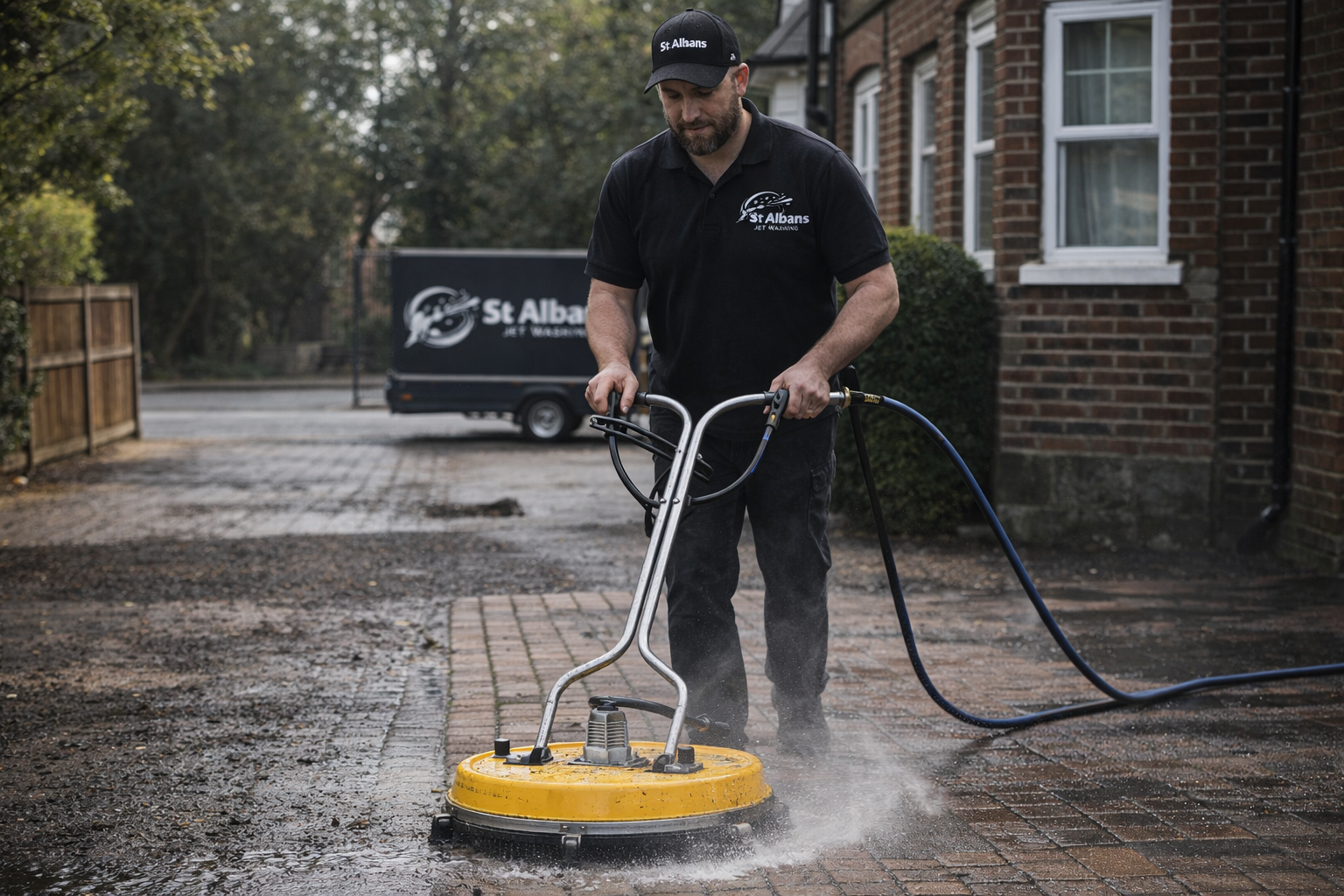
DIY or hire a professional?
A domestic pressure washer can handle light maintenance between deeper cleans, and there is real satisfaction in doing it yourself. But for a full restoration, the gap between a hired machine and professional kit is significant — both in cleaning power and in the control needed to protect your surfaces.
A professional also handles the parts people forget: even coverage with no tide marks, proper re-sanding, and safe handling of the run-off. If your driveway has not been touched in years, it is usually worth getting it back to a baseline professionally, then keeping on top of it yourself.